New eating habits and the risk of parasitic infections
Published on 24/10/2012
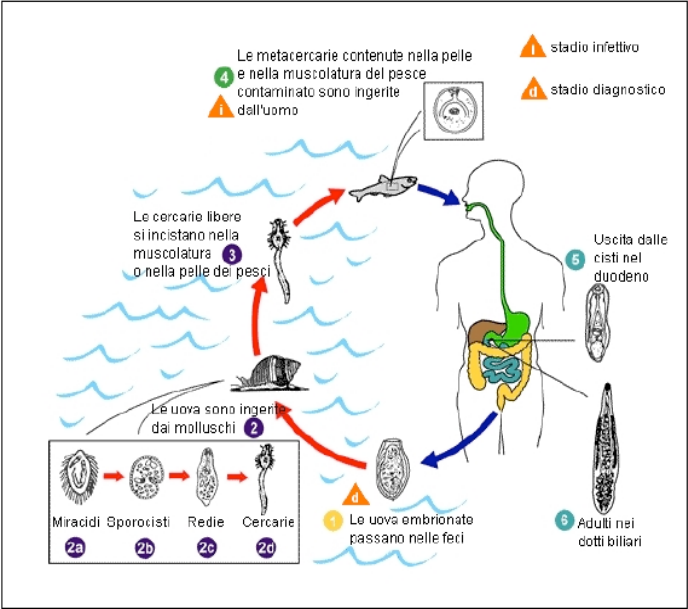
 A report recently appeared on Doctor News33 presenting the findings of a systematic review of the literature carried out by researchers at the University of Basel (Lancet Infect Dis. 2012 Mar;12(3):210-21) to assess the spread of infections caused by trematodes. The data, gathered from 181 studies, show that —despite conservative estimates— these are neglected diseases whose spread is nonetheless growing, with a consequently heavy health impact.
The report cites the summary figures, which point to a final worldwide estimate of 56.2 million people who, because of their diet, contracted a trematode infection during 2005. Of these, 7.9 million suffered serious consequences and 7,158 died, mainly as a result of cerebral infection and cholangiocarcinoma. These diseases turned out to be expanding sharply: between 1995 and 2005 there was a 423% increase in intestinal trematode infections, 119% for clonorchiasis, 12% for paragonimiasis and 11% for fascioliasis, while opisthorchiasis declined by 19%.
This phenomenon appears to be the result of often inadequate health conditions, of eating habits deeply rooted in certain areas (the spread of aquaculture), while in other areas the cause is to be found precisely in some major changes in diet (the increased consumption of raw fish). Thus the inhabitants of the Asian continent, in the Pacific and South-East regions, turn out to be the populations still exposed to the greatest risk.
Nutricity wanted to ask Prof. Enrico Novelli, university lecturer and member of the society's scientific committee, whether the danger was also a concrete one in our country.
"I had spoken about it recently, with particular reference to Opisthorchis and Diphyllobothrium. What we can say is that here these phenomena cannot be classified as emerging or expanding diseases. That said, the new culinary habits (the rise of eating raw food) and the spread of ethnic cuisines are leading to an increase in cases, without however reaching, for the moment, alarming levels. It would nonetheless be interesting from a scientific and clinical standpoint, not to say fundamental from a hygiene and prevention standpoint, to compile an up-to-date and reliable set of statistics on cases of human infestation by Anisakis, but to date such documentation is unfortunately not available.".
Dr. Paolo Pallini, nutritionist and likewise a member of Nutricity's scientific committee, wished to further clarify how the alarms raised by the international press regarding alleged cases of "larval infestations in the brain" are a sensational hoax. "Anisakis larvae cannot end up in the brain, but they do cause very acute abdominal pain and allergic reactions". The greatest risk remains that of raw or poorly cooked products. It is, however, fair to recall that food-hygiene protocols exist which guarantee safety even for raw products if they are correctly observed. Prolonged freezing at a temperature of -20 °C or below is a procedure that ensures the safety and decontamination of at-risk foods (all of this has in fact long been regulated by law: Ministry of Health ordinance of 12 May 1992, annex III, sec. VIII, ch. 3, letter d, point 1 EC Reg. 853/2004 as amended by EC Reg. 1020/2008.
There are then several factors that have a decisive influence on the hygiene of the fish product:
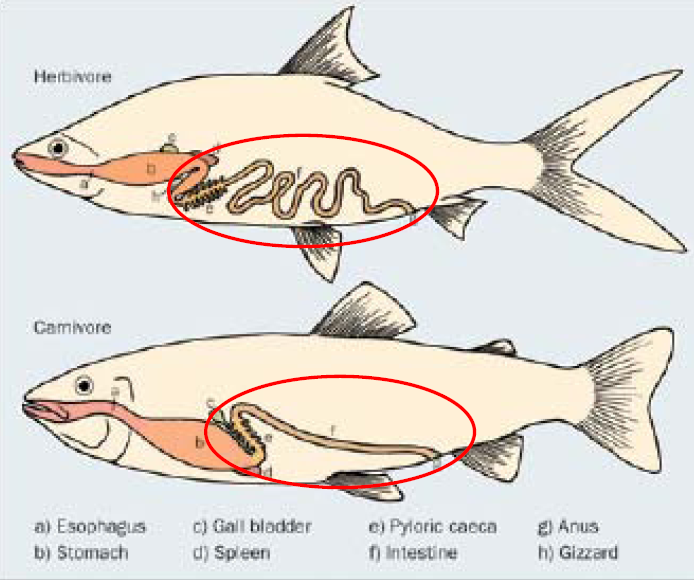
first of all eating habits, which are underpinned by significant anatomical differences
And again, if we assume identical conditions of preservation or storage, we find that the following also play a part:
The area of origin (cold seas, temperate seas, tropical or sub-tropical waters, fresh water)
The anatomical structure (flat or round, the presence and thickness of the mucus layer, the resistance of the skin), because —for example— in flat fish such as sole it is precisely the skin that is the source from which infections spread, whereas in round-sectioned fish (the majority, e.g. trout) infections spread starting from the animal's intestine.
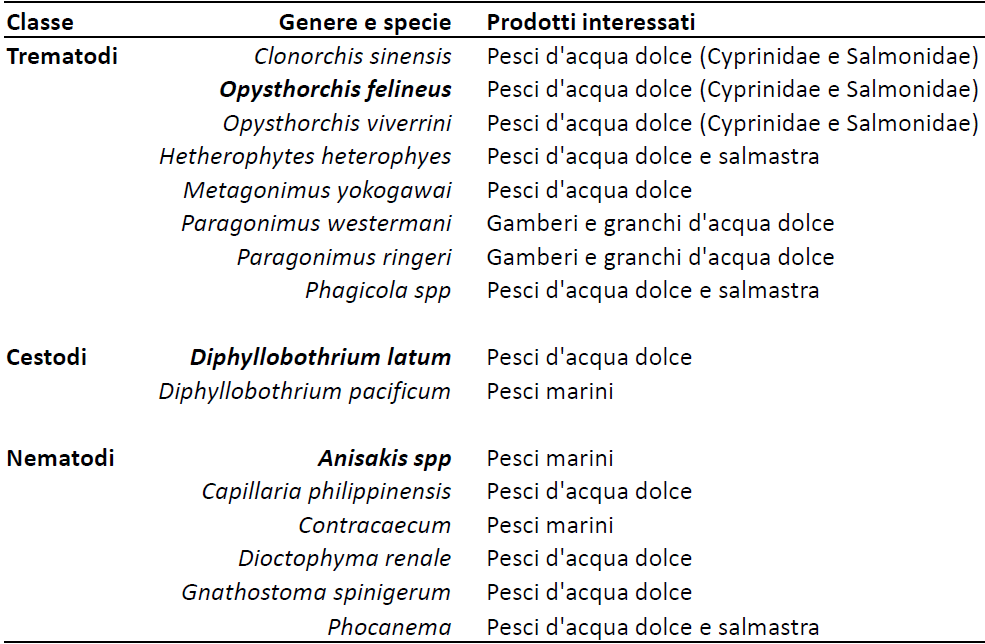
To find one's way through the "chaos" of parasites that contaminate fish, we have prepared a chart derived from a conference we attended last year: