15 things that need rethinking on food labels
Published on 25/2/2013
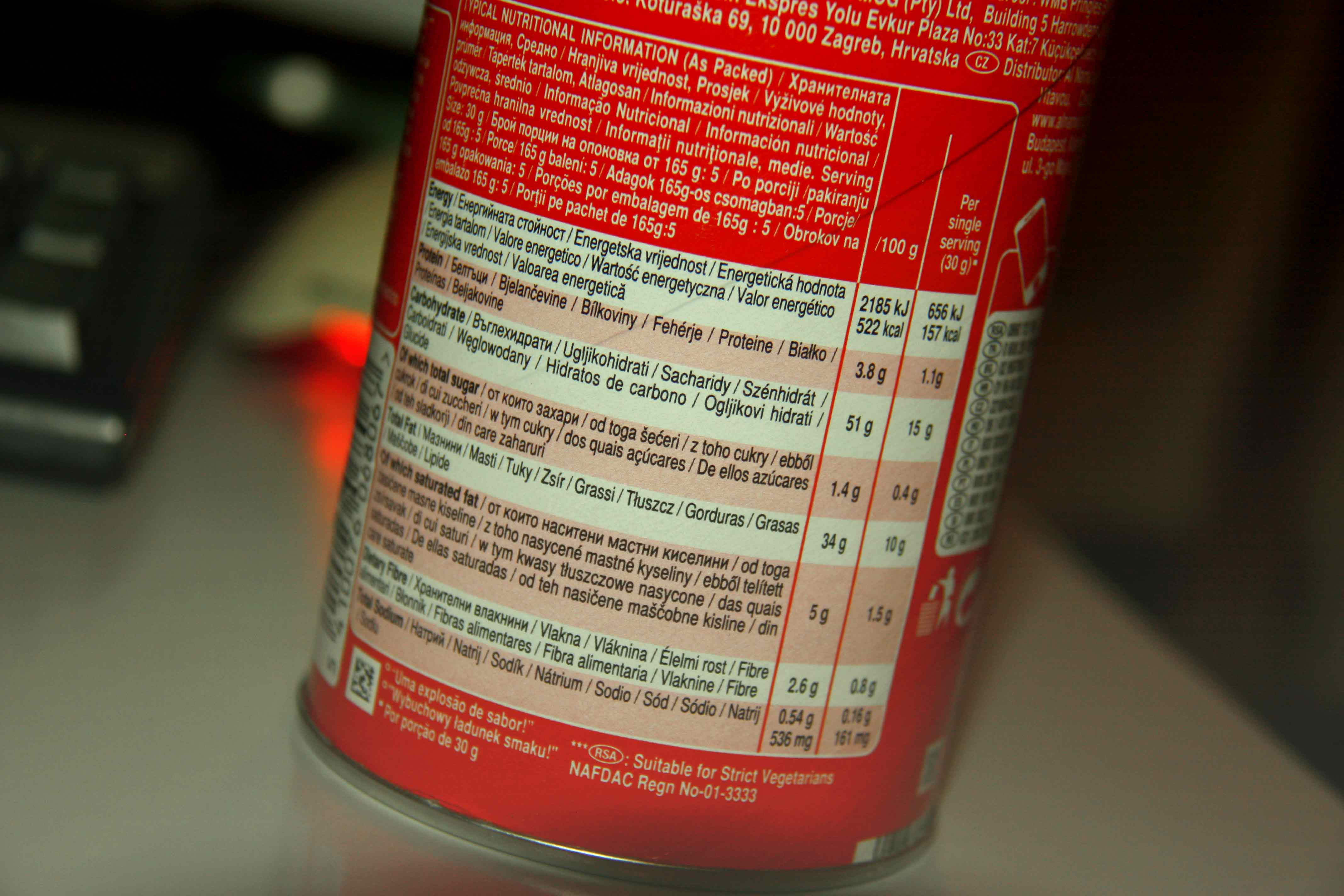 We are publishing the commentary by the editorial staff of Il Fatto Alimentare on the actions needed to improve the clarity and comprehensibility of the food labelling system that identifies products within the EU.
1) A list of ingredients written in legible typefaces
On some packages the wording appears in numerous languages in minuscule type: the “top” example is Rauch's Bravo fruit juice, with text translated into 24 languages. In this regard, it should be noted that from 14 December 2014, with the entry into force of EU Regulation 1169/11, every label will have to display the mandatory information in characters no smaller than 1.2 mm in height (measured on the lowercase x) and 0.9 mm for packages with a surface area of less than 80 cm².
2) A clear and understandable expiry date
Clear means not stamped with pinholes or presented as a sequence of numbers that look like the batch code. How many consumers, in fact, can work out that the numeric sequence 01.07.14 2 L 2741 11:21 on a label indicates a product expiring on the first of July next year?
3)An indication of the oil used
At present the generic wording “vegetable oil” is used, which almost always refers to palm, soybean, rapeseed and other oils of mediocre quality that are not normally sold in supermarkets. In any case, from December 2014 the nature of the vegetable oils used will have to be specified. Producers who today boast of the absence of hydrogenated fats will therefore have to disclose their widespread use of palm oil, which remains a low-quality oil from a nutritional standpoint and whose production is often associated with deforestation and land grabbing.
4) The presence of “trans fatty acids”
The reason is simple: they are bad for your health (there is a proven correlation between a diet too rich in trans and unsaturated fatty acids and higher risks of coronary heart disease and stroke). Many consumers, unfortunately, do not know they exist or what they are, and the time has come to fight this ignorance. EU Reg. 1169/11 expressly prohibits the mention of trans fatty acids in the nutrition table – which is instead mandatory in the United States. Why? The reason for this ban remains a mystery.
5) Realistic photographs of acceptable size
The size of the images must leave room on the package for the nutrition information and the list of ingredients. Photos and optional information, as prescribed by EU Reg. 1169/11, must not take space away from the mandatory information on the label. As for the images, some producers justify the discrepancy between the photos on the package and the actual appearance of the product with a little phrase written in microscopic characters: “The image is for product presentation purposes only.” Unfortunately the consumer, drawn in by the image, tends not to read the boilerplate phrase and is often left disappointed.
6)A clear indication of the amount of salt in the nutrition table
Labels often show the amount of sodium rather than that of salt. Consumers also want to know how much salt is in the product, and above all in a single portion. EU Reg. 1169/11, which will enter into force in December 2014, has replaced the “sodium” value in the nutrition table with its equivalent expressed in terms of “salt”.
7) Clear instructions on how to store the product and how long it keeps after opening
This is information provided for by the new EU Regulation 1169/2011. Shelf life after opening can, however, only be stated on certain products, and its estimate can never be exact since much depends on how the consumer stores the product. These are important and sometimes critical aspects, especially when the cold chain must be maintained, since, as we have already written, many household refrigerators do not maintain the required temperatures.
8)The olive harvest year on bottles of extra virgin olive oil
It would be interesting to have this information in order to understand how long ago the product was bottled
9)The curing time of cured meats
10)A clear and highly visible indication of foods suitable for vegetarians, vegans and/or people with coeliac disease
These indications are already used by some supermarket chains on their own-brand foods and by some companies (in the cured meats sector, for example, some producers indicate the absence of gluten on the label)
11) Nutritional values referring to 100 g of product and to a realistic portion
EU Regulation 1169/11 introduces a mandatory nutrition table for almost all products: the table must be based on 100 g or 100 ml. Values relating to the portion may be added on a voluntary basis.
12)Precise instructions on where to throw away the packaging.
Should we throw it in the paper bin, the glass bin, the plastic bin, or in general waste…? It would be nice if producers could also optimise the use of the various materials, reducing their surface area as much as possible. The problem is that municipalities do not all have the same systems for recovering and recycling waste and packaging.
13)Fewer additives, colourings and preservatives
Some products should have fewer ingredients. Why are Pringles, depending on the flavour, made with anywhere from 19 to 30 ingredients, while classic fried potato chips have only two (oil and salt)?
14)The abolition of all toys and figurines bundled with children's snacks
The issue is a delicate one and would deserve further investigation, all the more so since many of these products are placed in shops at child height, near the checkouts, and there are snacks with very attractive gadgets that are bought only for the toy. The problem is that these gadgets are almost always paired with junk food and serve only to attract children's attention.
15)Wording that is as clear and simple as possible
One may legitimately wonder what a consumer understands when faced with a box of breakfast cereal whose label lists 16 ingredients, flanked by 38 analytical values and 14 percentages. Perhaps an effort should be made to simplify things a little.