Eating habits get worse as evening approaches
Published on 4/12/2012
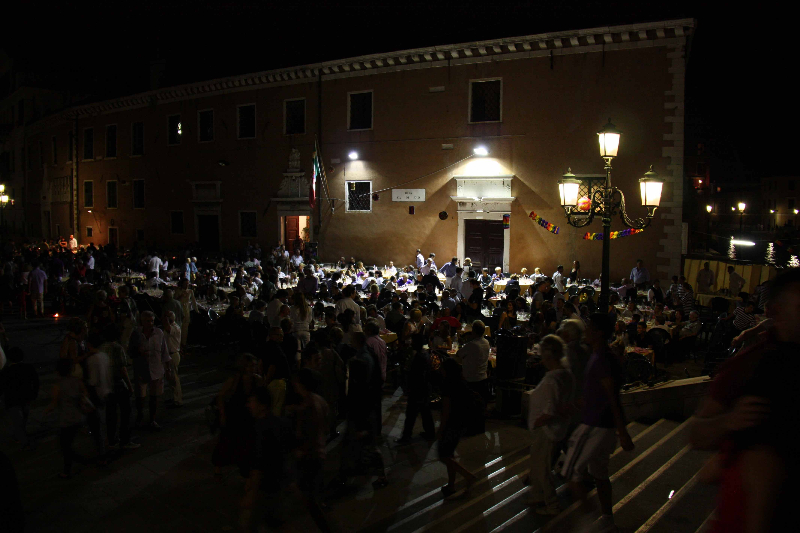 As the hours of the day go by, our eating habits also progressively deteriorate; in essence, by evening we tend to eat in a less controlled and less healthy way.
This conclusion was reached empirically by a study conducted by a young American start-up and reported by Corriere Salute, which, through the creation of an application (a program) for the iPhone, makes it possible to calculate the calorie content of a meal. The wide success enjoyed by the application allowed the company that produced it to monitor the results on a sample of over 500 thousand people.
Eatery -this is the name of the application designed to calculate the calories of a meal, developed by the company Massive Health- allows users to report what they have eaten. Not only by counting calories, but also by indicating where the meal was eaten and giving a rating on how healthy or unhealthy the food was. In this way, users can create in real time a sort of "index of good (or bad) eating behavior". All this is translated by Eatery into a geolocated infographic of colored dots that shade from green to red, depending on how balanced the meal was.
The empirical data gathered from such a large sample made it possible to establish with relative certainty, on the basis of the users' own reports, that the quality of meals consumed worsens as the hours go by. In essence, humanity eats a breakfast that is better than the lunch it will eat later, which in turn will still be better than the dinner it will consume at the end of the day.
The explanation, reports Corriere Salute, should be sought in psychological-behavioral factors, and in this regard the most recent and best-known studies seem to show that the self-control an individual possesses tends to wear out as time passes, thus diminishing toward evening.
A curious exception that would prove the rule is represented by the citizens of Copenhagen and São Paulo in Brazil, where the decline in self-control appears to be much smaller.