Italians prefer zero-mile food: 21 million shop directly from farmers
Published on 22/10/2012
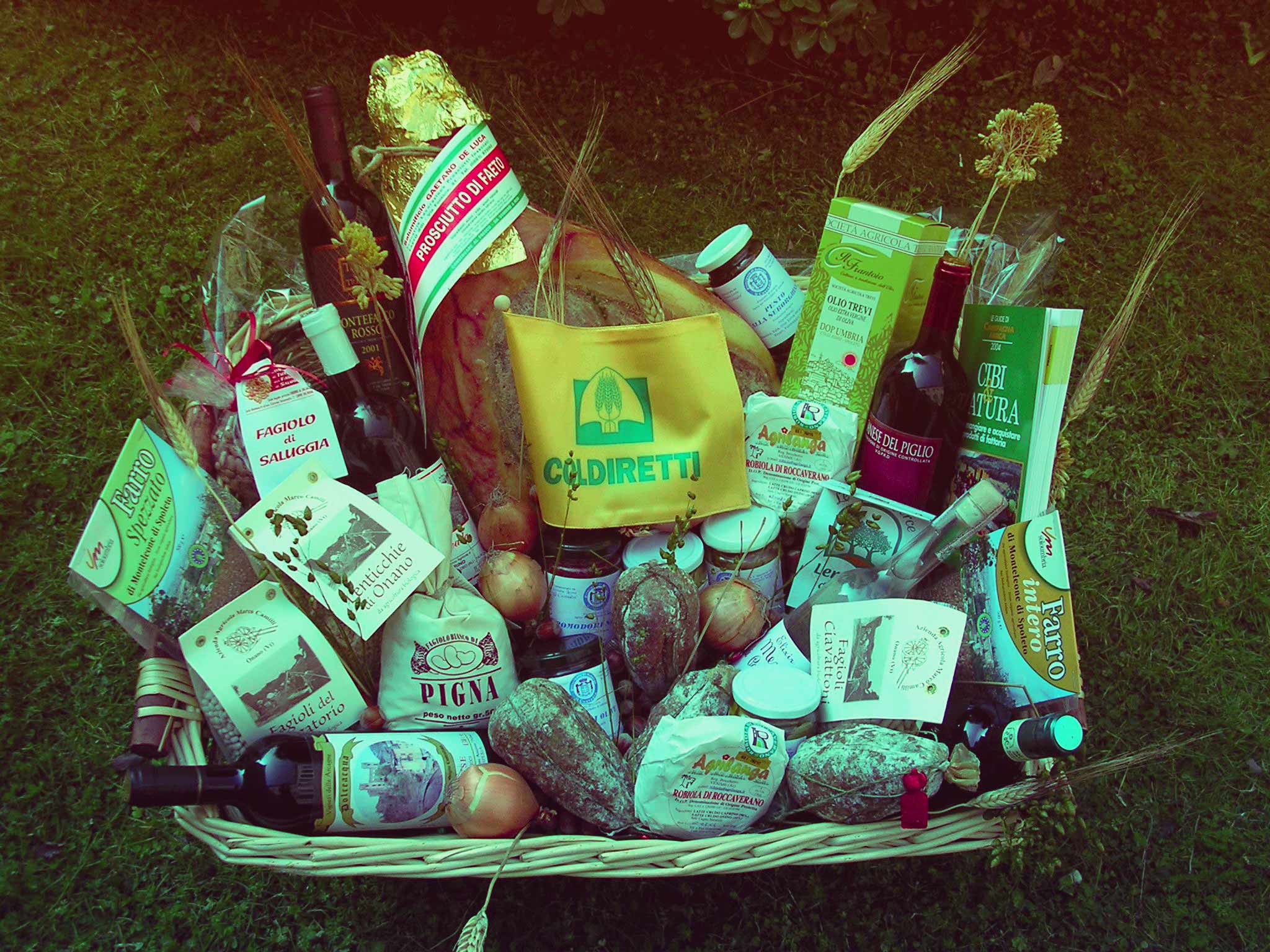 Almost one in two Italians visits farmers' markets, with a full 7 million doing so regularly, while the other 14 million shop there from time to time. A very high percentage of Italians (95%) would like to see direct-from-farmer sales become more widespread
Twenty-one million Italians did their shopping at farmers' markets over the past year to secure healthy local products with the best value for money, bucking the general trend in retail. This is what emerged from the first analysis on "The arrival of farmers' markets in Italy is revolutionizing grocery shopping", carried out by Coldiretti with the support of Censis and Swg, on the occasion of the inauguration of the national Campagna Amica festival "Cibi d'Italia" at the Circus Maximus in Rome, attended by Coldiretti president Sergio Marini.
It is a success that, by cutting out commercial intermediaries, has nonetheless had a moderating effect on the inflation trend recorded by Istat in September. Essentially, almost one in two Italian adults visits the so-called farmers' markets, with a full seven million doing so regularly, while the other fourteen million shop there from time to time. According to the Coldiretti/Censis analyses, this success is borne out by the fact that a very high percentage of Italians (95%) would like to see direct-from-farmer sales become more widespread, a conviction shared across all social groups and regions.
Farms that produce and sell directly are not just production units in the strict sense; they become social anchors, pillars of the communities in which their activity helps promote social cohesion. It is no coincidence that 90% of Italians would like the food they bring to the table to be produced in their own area. Of these, 39% believe this helps create jobs and wealth locally, 31% think the food is more wholesome this way, while the remaining 30% are convinced that this means goods travel shorter distances and, as a result, there is less pollution. In the collective perception, the short supply chain is therefore not just a way of producing and consuming, but a more complex process that affects employment levels and wealth creation, a kind of virtuous cycle that can change the socioeconomic trajectory of the communities involved.
«Our farmers' markets are creating new economies and new jobs while at the same time serving as a formidable tool for social cohesion, community engagement and food education, because they recreate a deep bond between consumer and producer, between the place of consumption and the place of production, between city and countryside», said Coldiretti president Sergio Marini, stressing that «starting from distinctiveness, the Italian agricultural supply chain ensures that this becomes not only a great competitive lever for businesses but also a great opportunity for people to live better».
According to a Coldiretti/Swg survey, the products most purchased at Campagna Amica farmers' markets are, in order: vegetables, fruit, cheeses, cured meats, wine, milk, bread, fruit preserves, dried fruit and nuts, biscuits and legumes, though there is also interest in non-food products such as farm-based cosmetics. Those shopping directly from producers at farmers' markets are 68% women, with a male presence much higher than average; the level of education is medium-high for 68% of buyers. Shoppers are under 54 years of age in 64% of cases, while social and economic status is medium-high in 82% of cases, according to the Coldiretti/Swg survey. This result shows that saving money is only one of the reasons driving purchases, and that the choice is strongly influenced by the search for healthy food, for information about products and by the need for reassurance about what ends up on the plate.
Farmers' markets in fact promote awareness of the seasonality of products, as well as the zero-mile philosophy, with food on sale that does not have to travel long distances, reducing atmospheric emissions. In addition, they perform an important role in recovering varieties at risk of extinction. It is estimated that at least 100 so-called minor plant varieties, including fruit, vegetables, legumes, wild herbs, and products obtained from at least 30 different breeds of cattle, pigs, sheep and goats raised on a small scale, find an outlet in the current network of Campagna Amica markets and farm shops.
At Campagna Amica farmers' markets you can find local products from the area, sold directly by the farmer in compliance with precise rules of conduct and an environmental code of ethics, verified by a third-party control system. The markets keep packaging waste in check by offering, for example, milk on tap; GMOs are banned and home-delivery services and special offers are often available, such as the sale of apples from Trentino for just one euro as part of the national Campagna Amica festival "Cibi d'Italia" at the Circus Maximus in Rome.
In Italy there are 1,105 farmers' markets, part of a direct-sales network across the country comprising 4,739 farms, 877 farm-stay establishments and 178 farm shops, for a total of 6,899 Campagna Amica points of sale, in addition to 131 restaurants and 109 urban gardens.
SHOPPING AT FARMERS' MARKETS
Italians who shop at the markets: 21 million
Of whom:
Regularly: 7 million
From time to time: 14 million
Source: Coldiretti calculations based on Censis analysis
WHY THEY PREFER THE SHORT SUPPLY CHAIN
Because it creates jobs and wealth locally: 39%
Because the products are wholesome: 31%
Because goods travel less and there is less pollution: 30%
Source: Coldiretti calculations based on Censis analysis
WHERE YOU CAN BUY DIRECTLY FROM THE PRODUCER IN ITALY
FARMS: 4,739
FARM-STAY ESTABLISHMENTS: 877
MARKETS: 1,105
FARM SHOPS: 178
TOTAL: 6,899
Source: Coldiretti calculations based on the Campagna Amica/Swg 2012 survey